Important Information
Investors should not base investment decisions on this website alone. Please refer to the Prospectus for details including the product features and the risk factors. Investment involves risks. Past performance is not indicative of future performance. There is no guarantee of the repayment of the principal. Investors should note:
- The investment objective of Global X Hang Seng High Dividend Yield Enhanced Income ETF (the “Fund”) is to achieve income and long-term capital appreciation by (i) investing in constituent equity securities in the Hang Seng High Dividend Yield Index (the “Reference Index”) and/or units of the Global X Hang Seng High Dividend Yield ETF (the “Reference ETF”) and (ii) selling (i.e. “writing”) call options on the Hang Seng Index and/or Hang Seng China Enterprises Index (“HSI/HSCEI”) to receive payments of money from the purchaser of call options (i.e. “premium”).
- The Fund employs an actively managed investment strategy. The Fund may fail to meet its objective as a result of the implementation of investment process which may cause the Fund to underperform as compared to direct investments in the constituent equity securities of the Reference Index.
- The Fund invests substantially in the Reference ETF, and it may also be subject to the risks associated with the Reference ETF’s investments.
- The Fund’s ability to utilise Reference Index Call Options successfully will depend on the ability of the Manager to correctly predict future price fluctuations. If a Reference Index Call Option expires and if the Reference Index declines during the option period, the premiums received may not be sufficient to offset the loss realised.
- The use of futures contracts involves market risk, volatility risk, leverage risk and negative roll yields and “contango” risk.
- Investing in Reference Index Futures and writing Reference Index Call Options generally involve the posting of margin. If the Fund is unable to meet its investment objective as a result of margin requirements imposed by the HKFE, the SEHK and/or the Fund’s broker, the Fund may experience significant losses.
- To the extent that the constituent securities of Reference Index are concentrated in securities of a particular sector or market, the investments of it may be similarly concentrated.
- The Fund may suffer from losses or delays when recovering the securities lent out. This may potentially affect its ability to meet payment and redemption obligations. Collateral shortfalls due to inaccurate pricing or change of value of securities lent, may cause significant losses to the Fund.
- The Manager may at its discretion pay dividends out of the capital of the Fund. Distributions paid out of capital, represent a return of an investor’s original investment or its gains and may potentially reduce the Fund’s Net Asset Value per Share as well as the capital available for future investment.
- The ETFs in which the Fund may invest may be managed by the Manager or its Connected Persons, and potential conflicts of interest may arise.
- The trading price of the Fund’s unit on the SEHK is driven by secondary market trading factors, which may lead to a substantial premium or discount to the Fund’s net asset value.
Rediscovering Dividend Stock: Enhancing Yield with Option Premiums
Summary
Driven by record-low bond yields and strengthening corporate governance, Chinese dividend stocks offer a compelling high-income opportunity.
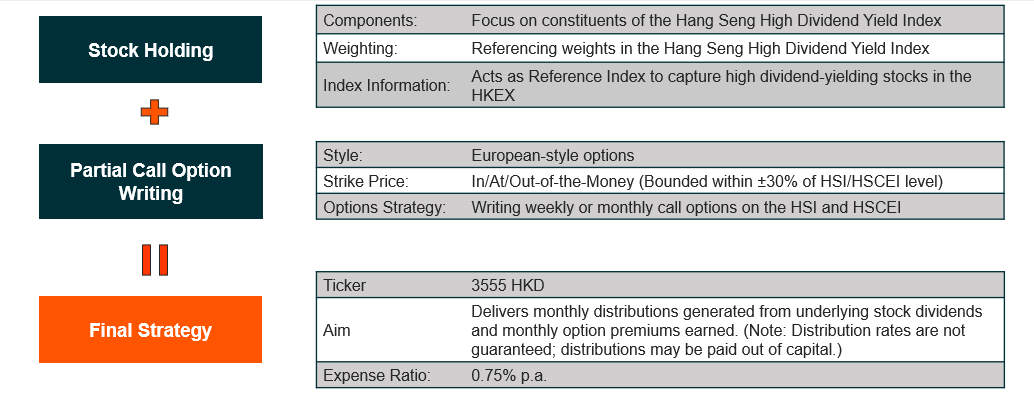
Capitalizing on this shifting landscape, the Global X Hang Seng High Dividend Yield Enhanced Income ETF (3555) targets a higher distribution yield compared to a traditional long-only strategy. This outcome is driven by a hybrid strategy that combines organic dividend payouts from core equity holdings with a tactical 30% to 50% partial option writing overlay.
Through this optimized structure, the fund aims to deliver robust monthly cash flow while retaining meaningful participation in equity market upside.
The fund Strategy
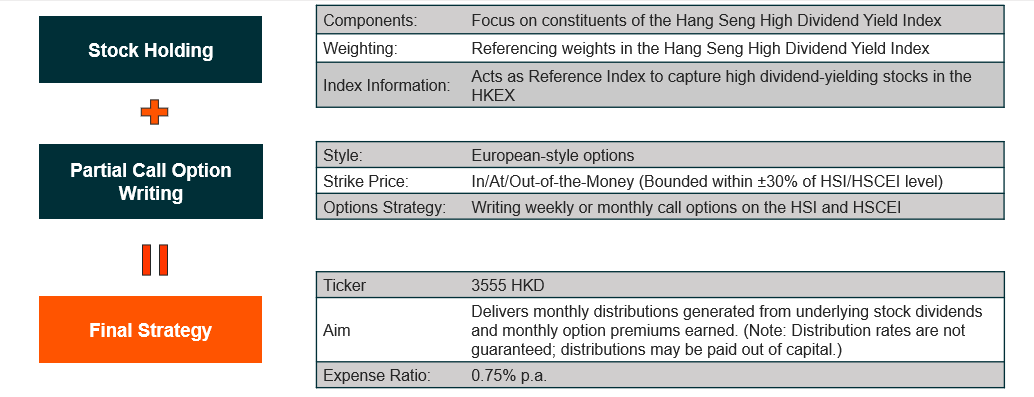
Ideal Conditions for Dividend Investing
Investing in Chinese dividend stocks has become significantly more attractive recently. Generally speaking, when does a dividend fund become an ideal investment?
- First: When valuations are low.
- Second: The broader economy or industrial cycles must remain stable. Such stability increases the likelihood that companies will maintain or grow their dividend payouts. Conversely, an overheated economy is often unfavourable for dividend plays, as investors in such environments typically pivot toward high-growth stocks or discretionary consumer goods.
- Third: When government bond yields are low, creating a significant yield gap relative to dividend returns.
- Fourth: When a shareholder-friendly regulatory framework and corporate culture are firmly established.
Assessing attractiveness of China dividend stocks
We believe that the China’s stock market in 2026 is highly aligned with the criteria for dividend investment mentioned above.
First, the valuation of Chinese dividend stocks is remarkably attractive, not only domestically but also from a global perspective. The most well know dividend index, Hang Seng High Dividend Yield Index currently boasts a dividend yield exceeding 6%, with a PER (Price-to-Earnings Ratio) of only around 8x. In contrast, dividend stocks in most other countries—particularly the United States—have become so expensive following a 15-year long-term equity market rally that they barely qualify as “value” plays. For instance, the DJI US Dividend 100 Index, a representative U.S. dividend stocks, offers a yield in the 3% range with a PER of approximately 15–16x.
Dividend yield comparison between Hang Seng High Dividend yield index and DJI US dividend index
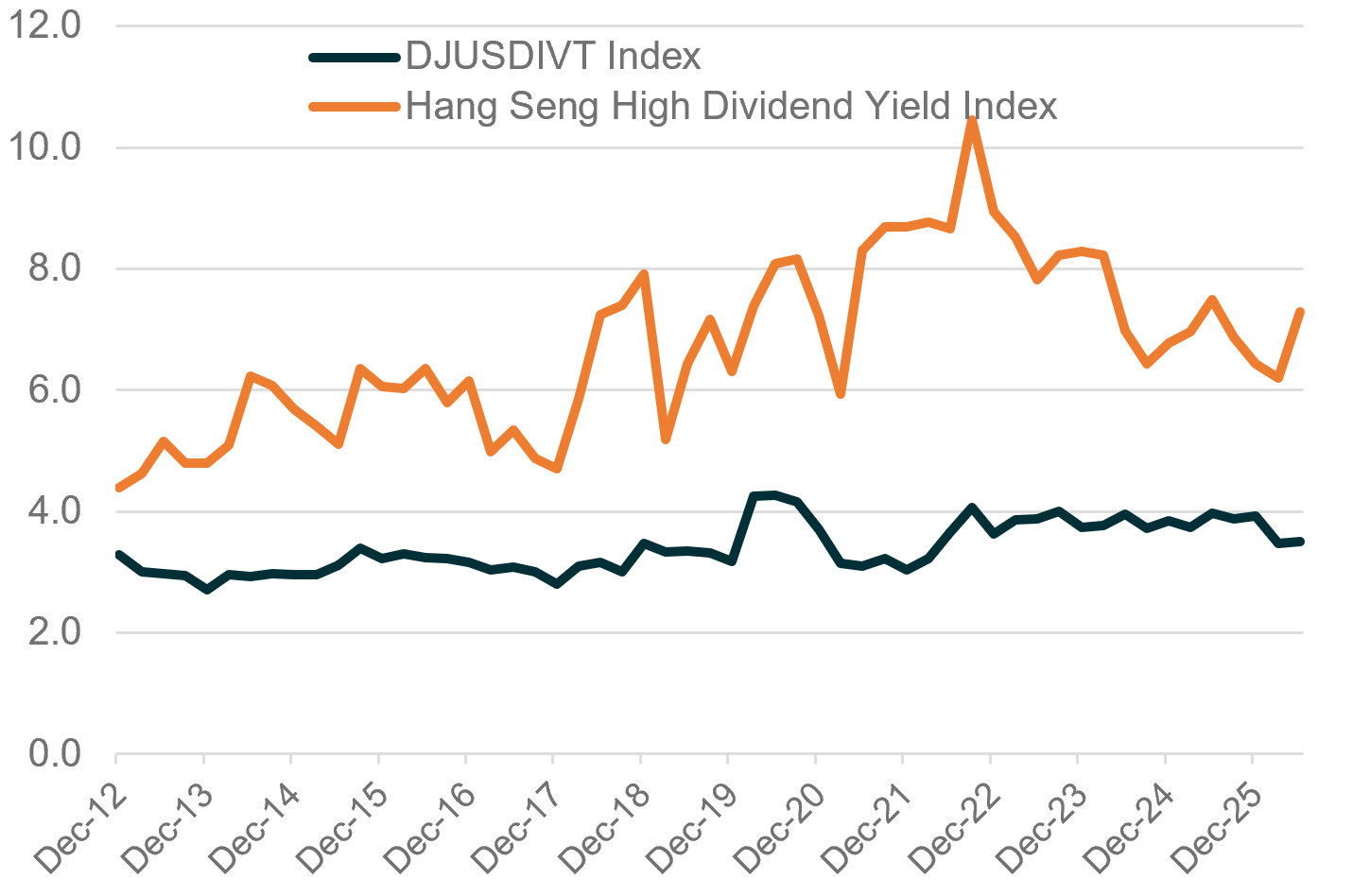
Source:Blomberg, July 2026
PER comparison between HS High Dividend yield index and DJI US dividend index
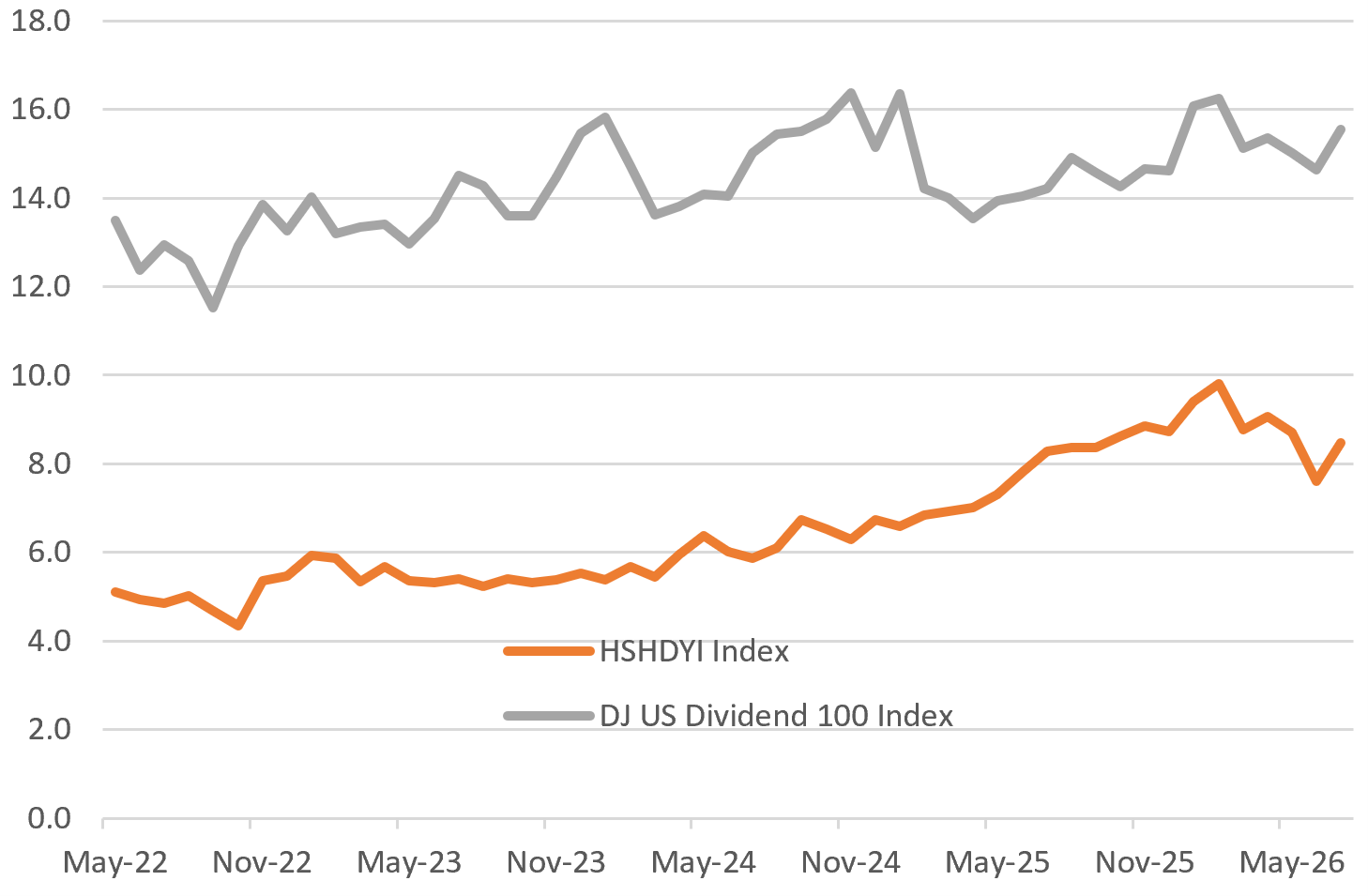
Source:Blomberg, July 2026
China economy goldilocks state for dividend investment
Second, the Chinese economy is in a “goldilocks” state for dividend investment. While GDP growth has entered the 4% range, it remains fundamentally robust. This resilience is primarily driven by a significant improvement in China’s export competitiveness over the past few years. Sectors such as automobiles, AI hardware, and batteries are leading a continued export boom. Cumulative exports for the first half of the year also grew by 17.6% in USD terms, exceeding market expectations.
The automotive industry is particularly noteworthy. With annual global sales reaching $4 trillion, it is the world’s largest tradable manufactured goods. China has now transitioned into a net exporter in this sector—a remarkable shift considering it was a net importer as recently as 2020. For historical context, Japan became a net auto exporter for the first time in 1960, and the Japan auto industry had driven the Japan economy till the 1980s. Furthermore, “The AI-driven new economy” is clearly revitalizing the landscape, with AI-related manufactured goods significantly boosting exports and stimulating domestic investment.
Admittedly, recent second-quarter economic indicators fell short of estimates. Retail sales growth this year is hovering between 2.0% and 2.5%, nearing historical lows, and the real estate downturn persists.
However, we remain confident in the Chinese government’s capacity to manage growth. Since strong exports sustained the economy throughout 2025 and 2026, there was little reason for aggressive stimulus. Should signals of a deeper downturn emerge, the government is expected to shift back into a pro-growth stance.
Two-way Economy: Property vs. Export
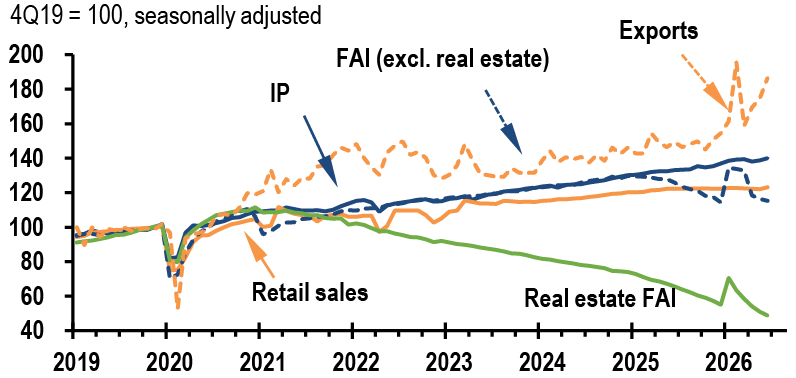
Source:NBS, J.P. Morgan. July 2026
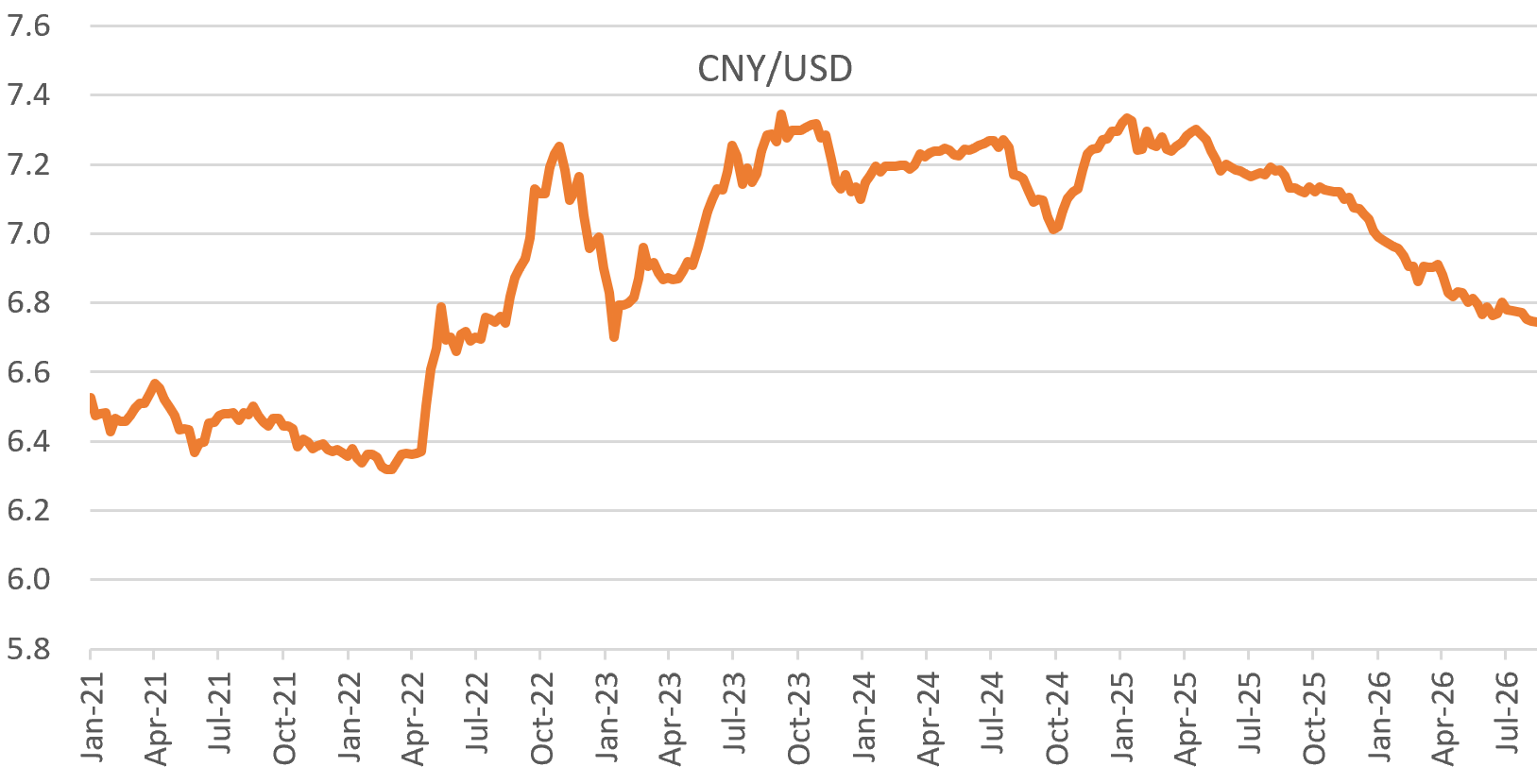
A Strong Currency Suggests Economy Resilience
Source: Bloomberg, August 2026
While many observers often compare present-day China to Japan in the 1990s, the two are fundamentally different. From the 1990s to the 2010s, Japan’s nominal GDP growth was virtually 0%. In contrast, China continues to demonstrate a nominal growth rate of around 5% in last three years, a level it is highly likely to maintain moving forward.
Capitalizing on Low Rates and Structurally Stable Inflation
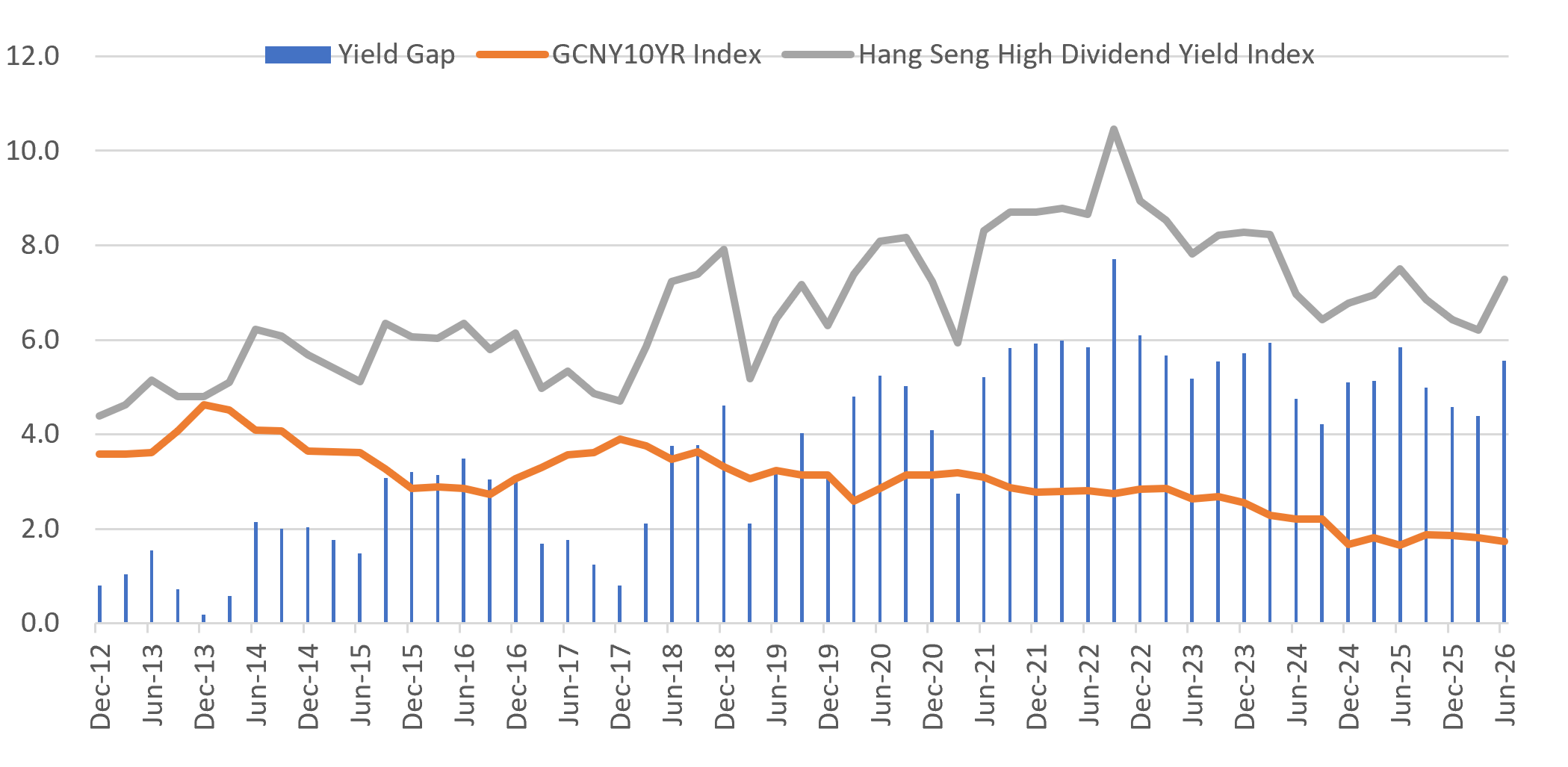
Third, China’s interest rates are remarkably low. The yield on the 10-year government bond stands at a mere 1.7%, representing a historical low. While this may be partly due to a rapid short-term decline—and we expect a recovery toward the 2% level—rates are highly likely to remain near 2% for an extended period. This is because China has successfully transformed inflation into a “manageable” variable.
Comparison between China Government 10years bond yield and HS high dividend index’s dividend yield
Source:Blomberg, July 2026
The primary driver behind this is the structural stability of Chinese prices (CPI). China now exerts significant control over a substantial portion of its inflation components, thereby reducing its vulnerability to external price shocks.
A prime example is crude oil. Despite the recent surge in global oil prices fueled by Middle East tensions, Chinese inflation remained largely stable. This resilience stems from China’s decreasing dependence on oil, as the nation has already reached “peak oil” consumption.
This shift is driven by the rapid proliferation of battery electric vehicles (BEVs). Currently, EVs account for only 15% of the total vehicle fleet on the road. However, this figure is projected to exceed 70% within the next decade, a transition that will trigger a sharp decline in crude oil imports.
Furthermore, the likelihood of a spike in electricity cost in China remains low. Over the past 15 years, China has aggressively built out a massive infrastructure of “clean energy” sources (solar and wind) that are approximately 50% cheaper than traditional coal-fired power. This capacity allows China to meet even surging electricity demand. In contrast, most other nations, including the U.S., are facing significant hikes in utility costs due to rising oil prices and the power requirements of AI data centers.
Also, healthcare costs in China are not rising. This is due to the increasing share of domestically produced innovative drugs, which has kept pharmaceutical prices stable. We expect a further influx of such home-grown innovative medicines in the future.
Simultaneously, agricultural production has seen steady growth through the large-scale modernization of farming over the last decade. While there were once concerns that food prices would outpace rising national income, the prices of staples like pork and fruit have actually plummeted due to a surge in domestic productivity. As agricultural efficiency continues to improve, inflationary pressure from the food sector is expected to remain minimal.
Components of China CPI (2025)
| Category | Weight | Note |
|---|---|---|
| Residence (Housing) | 22% | Rent, gas, electricity, water, home maintenance, etc. |
| Food, Liquor & Dining Out | 17% | Pork, beef, fresh vegetables, fruits, alcohol, tobacco, etc. |
| Transportation & Communications | 14% | Vehicle, fuel, public transit, telecom fees, etc. |
| Education, Culture &Entertainment | 11% | Tuition, movies, tourist services, etc. |
| Healthcare & Medical Care | 9% | Pharmaceuticals, hospital services, etc. |
| Clothing | 7% | Apparel, footwear, textiles, tailoring services, etc. |
| Household Goods & Services | 6% | Furniture, home appliances, personal care, etc. |
| Other Goods & Services | 3% | Financial services and other niche service fees |
| Total | 100% |
Source:NBS, 2026
The Policy Shift Toward Shareholder Returns
Fourth, is China’s corporate culture becoming shareholder-friendly? While this was certainly not the case in the past, the landscape has shifted significantly. A pivotal change occurred in 2024 when the Chinese government announced new capital market policy so called “新9条“.
In the past, the government actively encouraged the use of capital markets as a primary funding vehicle for startups and emerging enterprises. However, this approach led to an excessive supply of new shares and eventually contributed to the accumulation of industrial overcapacity across various sectors.
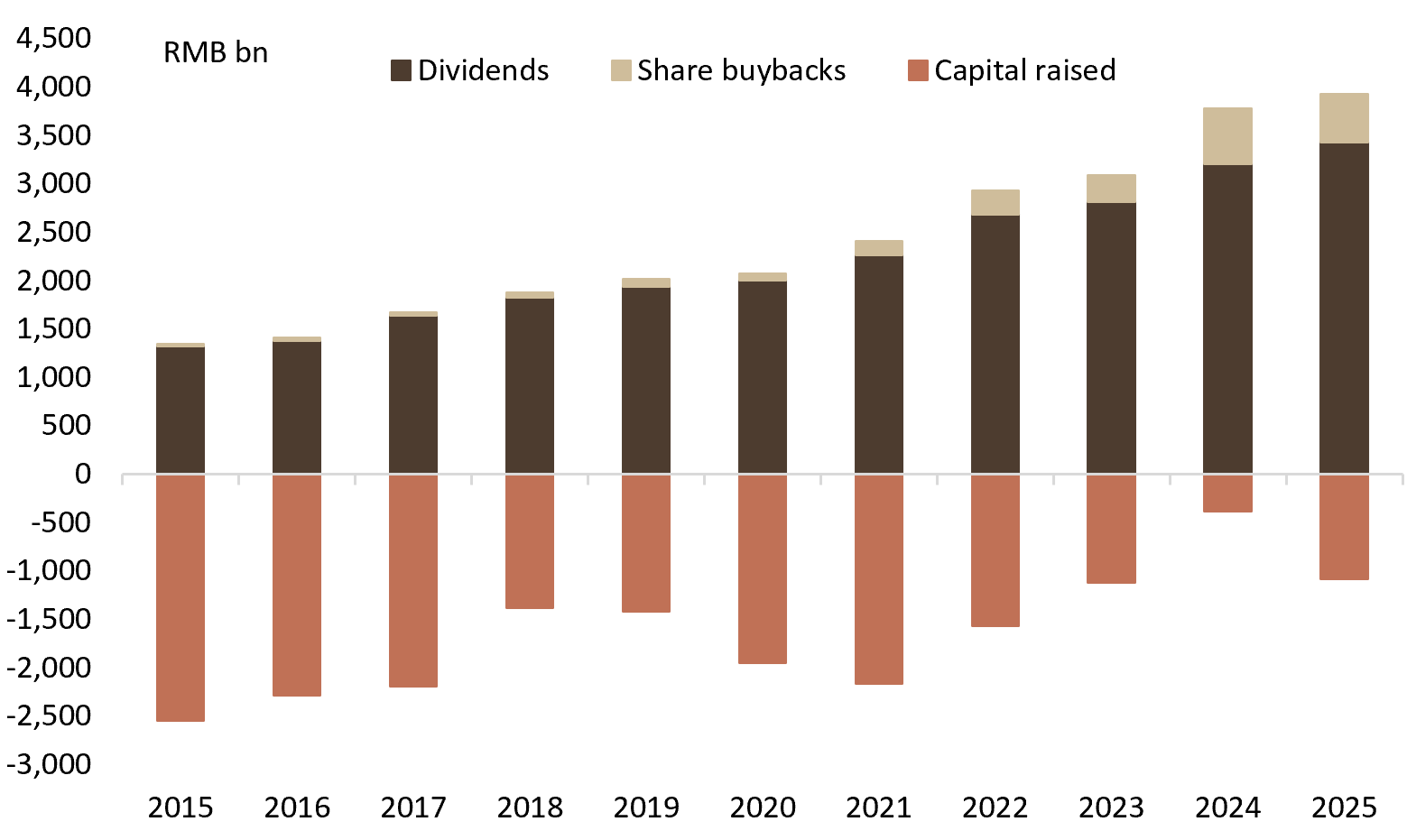
Recently, the government has pivoted its policy. Aside from strategic high-tech sectors like semiconductors, the authorities are now restraining IPOs while simultaneously urging established companies to increase their dividend payouts. We are now seeing a clear trend among Chinese firms to either raise their dividend payout ratios or, at the very least, commit to maintaining current dividend levels. For dividend investors, this is undoubtedly a welcome development.
Amount of capital raising vs. shareholder return in China equity bourses
Source:UBS, 2026
Balancing Equity Volatility and Drawdown Protection
However, dividend investing is not without its risks. As a form of equity investment, it remains highly sensitive to market fluctuations and volatility. For conservative investors who prioritize capital preservation—similar to the stability of government bonds—dividend stocks may still feel burdensome.
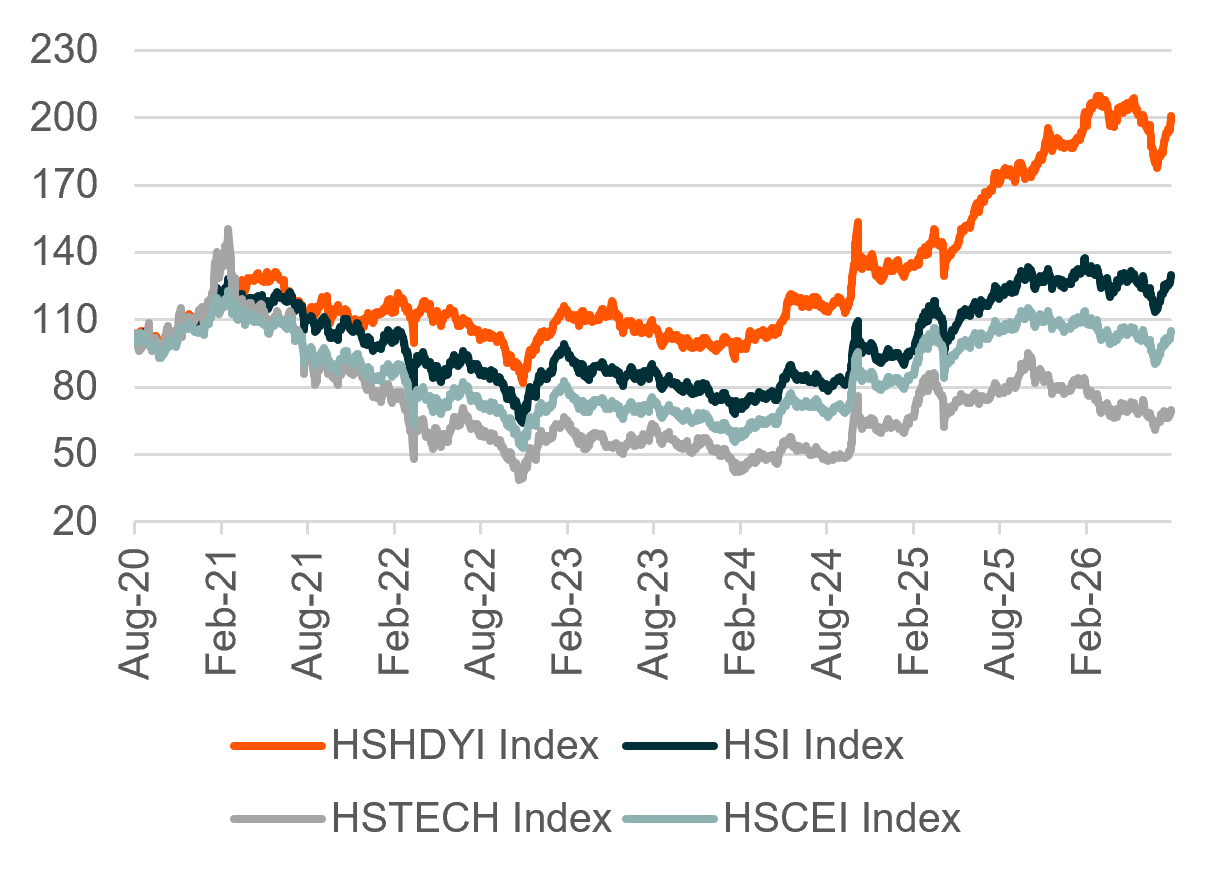
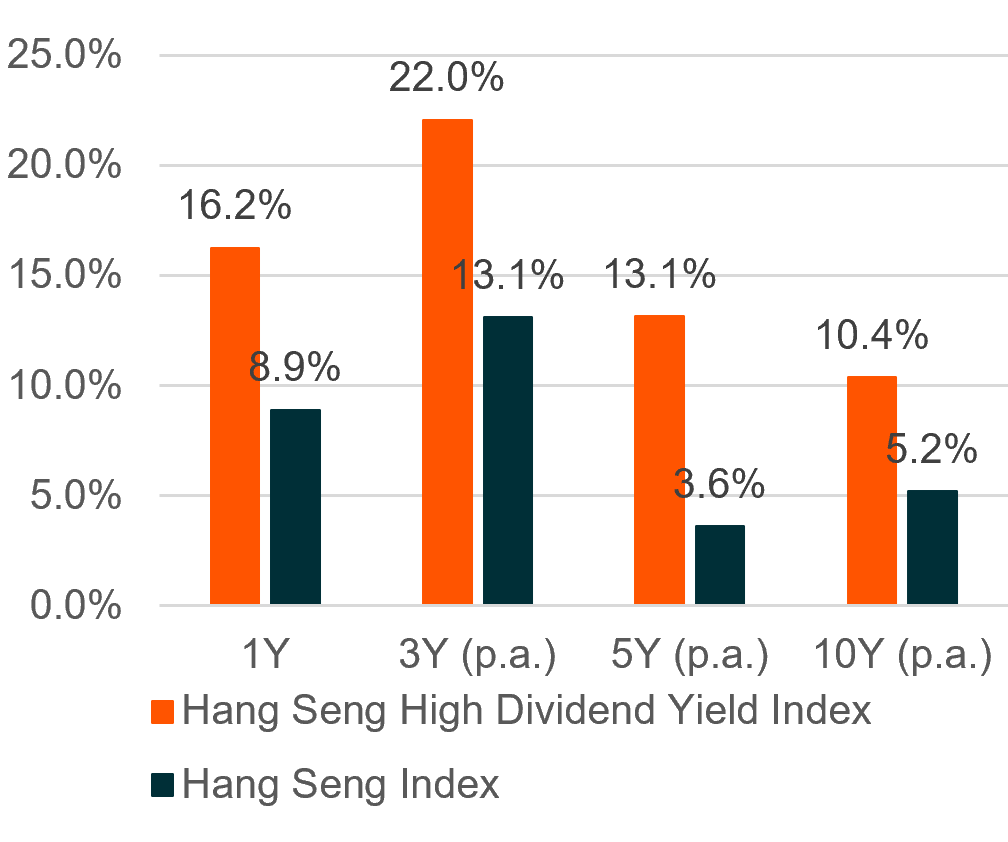
For instance, while the Hang Seng High Dividend Yield Index has generally outperformed the broader Hong Kong market over the last decade, it still experienced sharp pullbacks. Its Maximum Drawdown (MDD) reached approximately 42% in 2022. In contrast, the 10-year Chinese government bond saw a maximum price decline of only around 4% during the same period. While long-term returns remain attractive, investors must be prepared to weather such short-term volatility.
Major index performance comparison: Hang Seng High Dividend Yield Index vs. Hang Seng Index vs. Hang Seng Tech Index
 |
 |
Source : Hang Seng, Bloomberg, July 2026
Introducing a Hybrid Income Strategy via Partial Covered Calls
In response, Global X is launching a new product Global X Hang Seng High Dividend Yield Enhanced Income ETF (3555 HK) on August 20, 2026. This fund is designed for conservative investors who seek the attractive yields of Chinese dividend stocks but are wary of their inherent volatility. The core of this strategy involves maintaining a traditional dividend portfolio while integrating a partial covered call strategy.
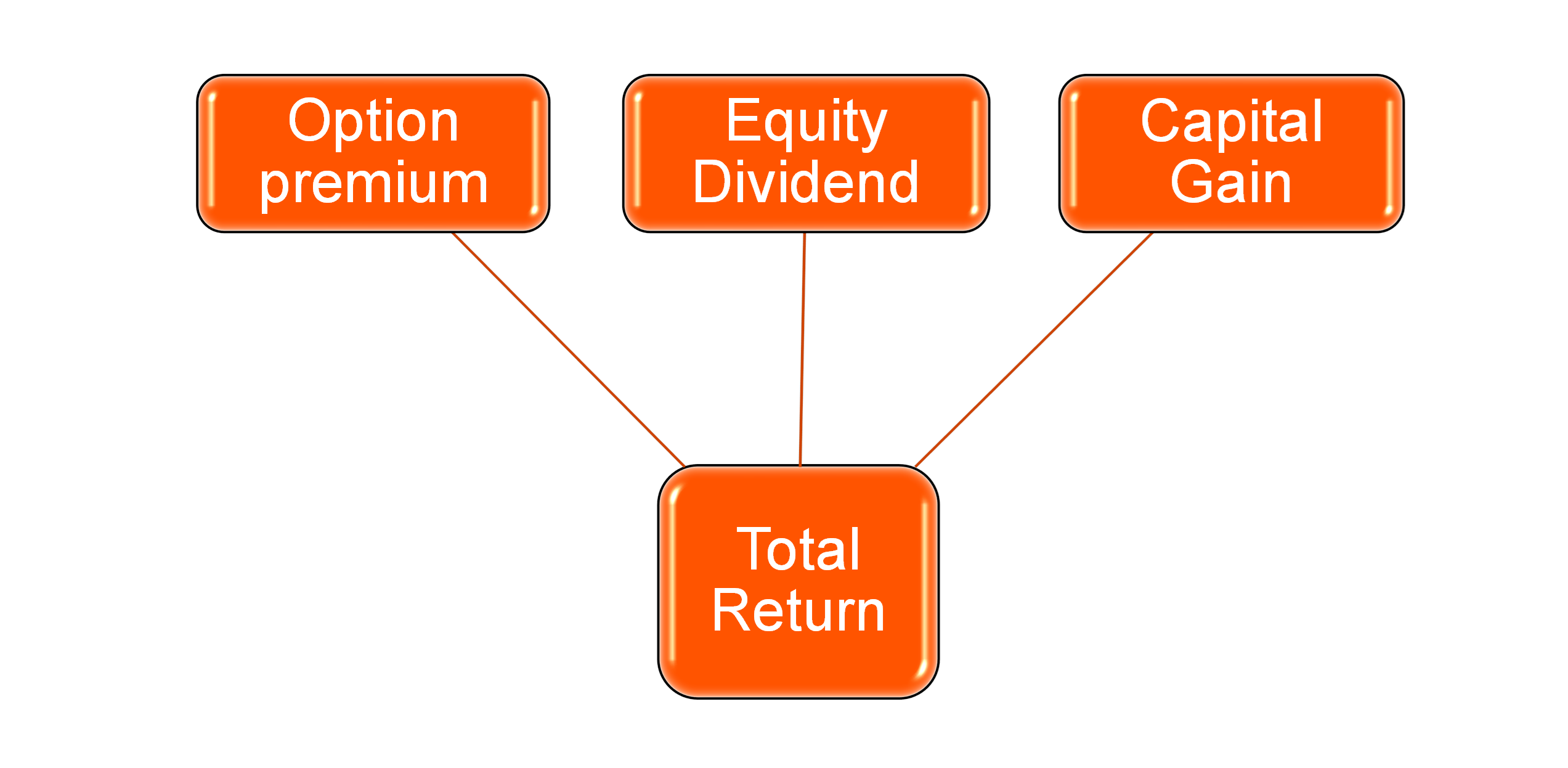
What is covered call strategy? It is an investment technique where an investor holds a long position in an asset and simultaneously writes (sells) call options on that same asset. In essence, the investor holds the stock but sells the potential upside beyond a certain price to another party in exchange for a fee.
Payoff Illustration of covered call strategy
Source: Mirae Asset Global Investments (HK), 2026
Unlike traditional covered call ETFs that typically sell options against 100% of their holdings, this fund sells call options against only 30% to 50% of its assets. This approach generates a monthly option premium, which, depending on market conditions, aims to distribute a higher annualized yield than the traditional long-only strategy.
As with any covered call strategy, there is a trade-off: in exchange for the premium income, investors must forfeit a portion of the upside potential during sharp market rallies. However, because this fund utilizes a partial overwrite, it retains significantly more participation in bull markets compared to standard 100% covered call products. It strikes a balance by leveraging the high natural yield of the Hong Kong market and supplementing it with a modest, non-aggressive income booster.
While partial covered call strategies are well-established in markets like the U.S., this represents a first-of-its-kind ETF for the Chinese and Hong Kong equity markets. We believe this product is inherently superior because it builds upon the already robust income sources of the Hong Kong market rather than relying solely on option premiums.
The Fund Strategy
Source: Mirae Asset Global Investments (HK), 2026
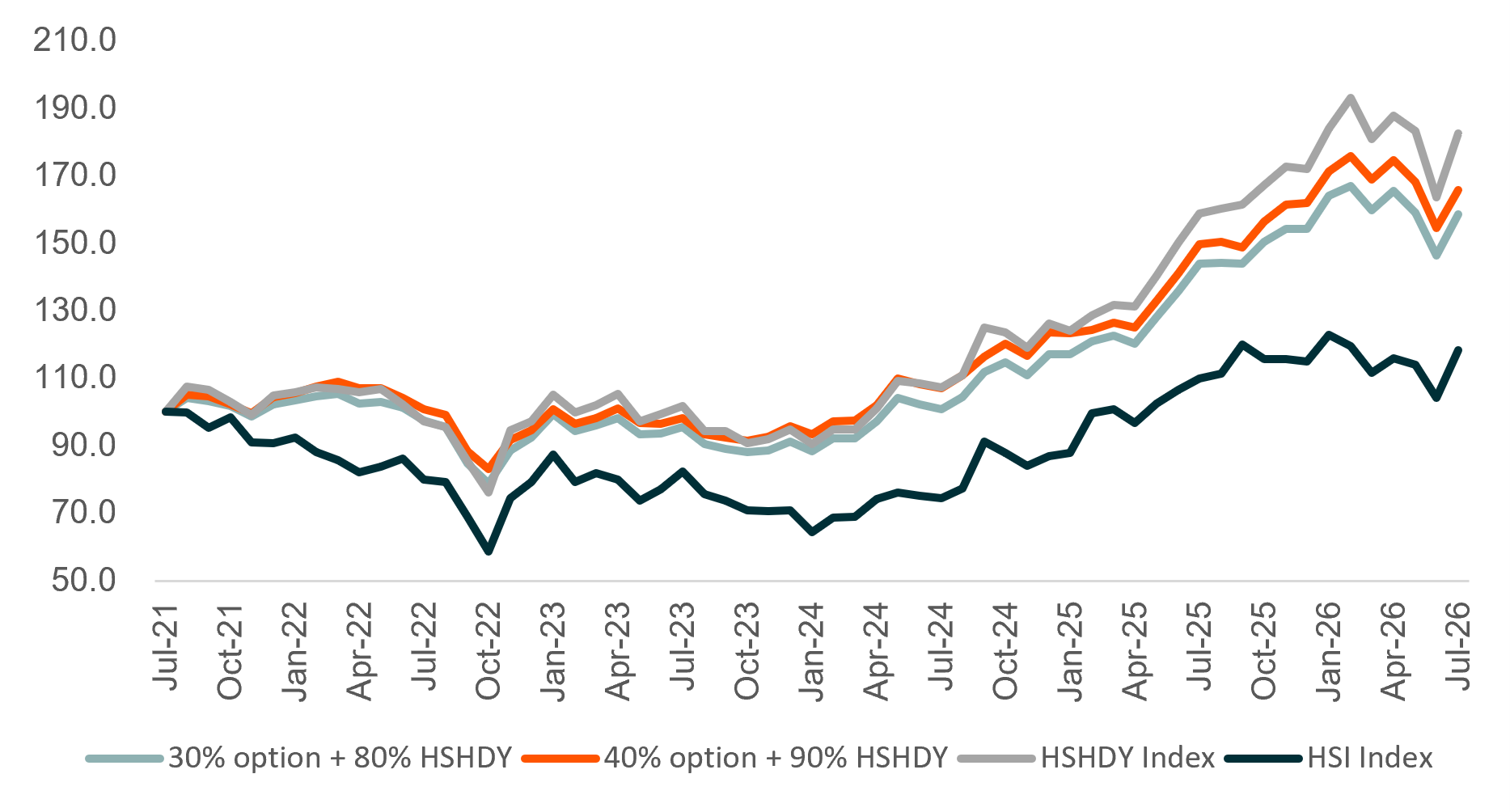
(Simulated) Market Performance Comparison Enhanced Income Strategy, HSHDY Index and Hang Seng Index
Source: Mirae Asset Global Investments (HK), August 2026
Note: this simulation assumes a 30% or 40% HSI and HSCEI call option writing and reflected the last 5 years’ option premium statistics. This is simulated data for illustrative purposes only. Simulated performance is not indicative of the actual past or future performance of the fund, and there is no guarantee that similar results will be achieved in the future.
In the worst-case scenario around October 2022, all strategies experienced significant drawdowns, with the HSI Index hitting a bottom at ~58.0. The option-enhanced portfolios effectively cushioned the drop, staying well above the HSI Index (~76.0 vs. ~58.0). Across the entire observation period, both custom strategies consistently outperformed the broad benchmark, demonstrating strong downside protection.
(Simulated) Portfolio Characteristics comparison Enhanced Income Strategy, HSHDY Index and Hang Seng Index
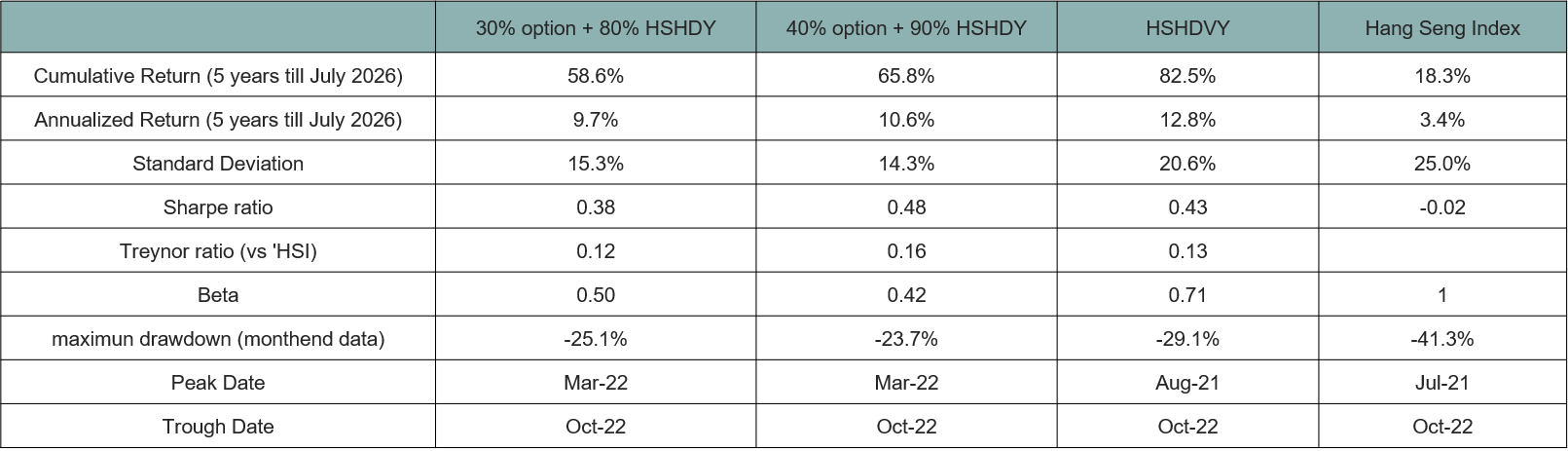
Source: Mirae Asset Global Investments (HK), August 2026
Note: this simulation assumes a 30% or 40% HSI and HSCEI call option writing and reflected the last 5 years’ option premium statistics. This is simulated data for illustrative purposes only. Simulated performance is not indicative of the actual past or future performance of the fund, and there is no guarantee that similar results will be achieved in the future
Risk and limitation
Of course, this strategy carries its own risks. Like any covered call product, it may significantly underperform the underlying index during a rapid market surge. Although the partial overwrite leaves the “ceiling” partially open, the losses from the short call positions will eventually cap the gains from the rising stock prices.
Furthermore, while the monthly premiums can partially cushion a downturn, they cannot fully prevent principal loss in a bear market. If the stock prices of the underlying dividend companies fall more than the premium collected, the fund’s net asset value will decline, exposing investors to downside risk. Ultimately, this product does not eliminate equity volatility; rather, it is structured to mitigate downside pressure at the expense of limited upside participation.



 (852)3555 5888
 Leave Us A Note