Tokenized Funds: Bridging Traditional Finance and Web3
As financial technology and Real World Assets (RWAs) continue to converge, traditional asset management is undergoing a fundamental transformation. Supported by regulatory initiatives from the Hong Kong Securities and Futures Commission (SFC) and the Hong Kong Monetary Authority (HKMA), tokenized funds are gradually entering the mainstream investment landscape and becoming a key bridge between traditional finance (TradFi) and decentralized finance (DeFi).
1. What is Tokenization?
Tokenization refers to the process of representing rights, interests, or ownership of an asset, whether financial, physical, or intangible, in the form of a digital token recorded on a blockchain. These tokens can then be transferred or traded on the blockchain network.
| Comparison | Traditional Funds | Tokenized Funds |
|---|---|---|
| Ownership | Centrally maintained by a transfer agent (TA) or custodian | Recorded on a distributed blockchain ledger, providing transparency and immutability |
| Trading | Limited to business days and subject to settlement delays | Potential for 24/7 operation with real-time or near real-time settlement |
| Operations and Distribution | Relies on manual reconciliation and traditional intermediaries | Automated through smart contracts for distributions, transfers, and settlements |
| Capital Efficiency and Composability | Capital remains within traditional financial systems | Can serve as high-quality collateral within compliant Web3 ecosystems and DeFi protocols |
2. What Is a Tokenized Class?
A Tokenized Class refers to a separate share class or unit class established within an existing investment fund structure. The ownership and economic interests of the fund are represented as digital tokens on a blockchain, where each token (or fractional token) corresponds to a fund unit in that class.
This provides investors with digital proof of ownership based on distributed ledger technology (DLT).
3. How Does a Tokenized Fund Operate?
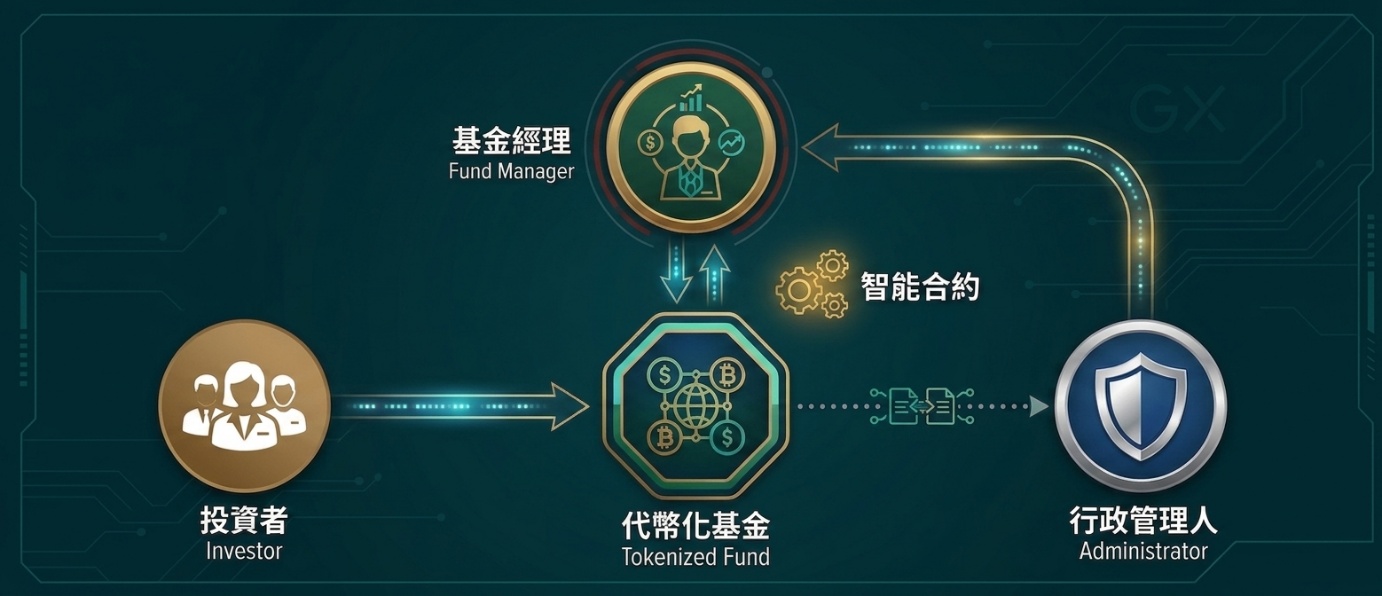
Tokenized funds typically combine off-chain assets with on-chain smart contracts.
From an operational and record-keeping perspective:
- The transfer agent (acting as the fund administrator) maintains the official shareholder register off-chain through traditional book-entry records.
- The blockchain-based digital records serve as a parallel and backup record.
- Although distributed ledger technology is used, legal settlement finality continues to occur off chain.
- In the event of discrepancies, the transfer agent’s off-chain shareholder register prevails.
To maintain a permissioned structure:
- Tokens are issued as permissioned tokens.
- Smart contracts incorporate approval signatures and whitelisting mechanisms, allowing transfers only between approved and registered wallets.
- Tokens may only be minted or burned upon instruction from the transfer agent and approval by the fund manager, following consultation with the custodian.
4. What Are the Potential Benefits and Risks of Tokenized Funds?
Potential Benefits
- Enhanced Operational Efficiency and Lower Costs
Blockchain technology streamlines fund administration and operations. Through smart contract automation, key processes such as income distribution, fund redemptions, and compliance checks can be executed efficiently with reduced reliance on traditional intermediaries.
This helps minimize operational errors while significantly improving processing speed and efficiency.
- Greater Transparency
Blockchain technology provides a highly transparent record of transactions. Every transaction involving tokenized fund units is recorded on a distributed ledger that can be viewed by authorized network participants in real time.
This transparency allows investors to verify ownership and transaction history more effectively, reducing the risk of fraud and operational misconduct.
- Improved Tradability and Liquidity
Tokenized funds may potentially be listed on virtual asset trading platforms and, in the future, support round-the-clock trading.
This could enhance liquidity and offer investors greater flexibility in managing capital and accessing markets.
Potential Risks
- Underlying Blockchain Technology Risks
Blockchain is still an evolving technology. Security vulnerabilities, software bugs, network forks, and interoperability issues may affect the stability and operation of tokenized funds.
- Digital Asset Security Risks
If an investor’s private key is lost, stolen, or compromised, unauthorized access to digital assets may occur, potentially leading to permanent loss of ownership.
- Reliance on Service Providers and Trading Platforms
Tokenized funds depend on various service providers, including tokenization service providers, custodians, and authorized distributors.
Any disruption or cessation of services by these participants could negatively impact fund operations.
- Regulatory and Legal Uncertainty
Regulations governing blockchain technology continue to evolve. Changes in legal and regulatory frameworks may affect the issuance, management, and distribution of tokenized fund shares.
Additionally, because tokenized shares differ from traditional fund units in how ownership and transactions are recorded, resolving legal disputes under existing laws may be more complex.
5. How Are Tokens Stored?
Tokens are stored in a blockchain wallet, typically an application that safeguards the user’s private keys and enables the transfer of digital assets on a blockchain network.
For tokenized funds, fund managers generally offer various wallet solutions to accommodate different investor preferences and security requirements. These solutions differ in terms of security, convenience, and level of investor control.
- Custodial Wallet
A custodial wallet is provided and managed by a licensed third-party custodian on behalf of the investor, including the management of private keys.
This option is generally suitable for investors seeking convenience and who prefer not to assume responsibility for safeguarding private keys themselves.

 (852)3555 5888
 Leave Us A Note